
F-150 Maintenance Tips for UAE Driving Conditions
The Ford F-150 is built to handle tough work, but the UAE climate can be challenging for any vehicle. Extreme heat, blowing sand, long highway drives, and heavy traffic increase wear on important components.
To keep your truck reliable, change the engine oil on time and maintain the cooling system. Replace the air filters regularly, test the battery, and check the tire pressure.
Also inspect the brakes, service the transmission, monitor the suspension, and perform routine computer diagnostics. Following these maintenance practices helps improve performance, reduce repair costs, and extend the life of your pickup.
Why F-150 Maintenance Tips for UAE Driving Conditions Are Different?
The UAE is considered a severe driving environment because of high temperatures, desert dust, humidity, and heavy traffic. These conditions put extra pressure on the engine, cooling system, transmission, suspension, and electrical parts.
While the factory maintenance schedule works for normal climates, it is often not enough for local conditions.
Owners should shorten many service intervals to reduce wear and prevent expensive repairs. Regular inspections also help find small issues before they become major mechanical problems.
Recommended Maintenance Schedule
| Maintenance Item | Recommended UAE Interval |
| Engine oil and filter | Every 10,000 to 12,000 km |
| Engine air filter | Every 15,000 to 20,000 km |
| Cabin air filter | Every 15,000 km |
| Tire alignment | Every 15,000 km |
| Battery health test | Every 6 months |
| Brake inspection | Every service visit |
| Coolant inspection | Monthly |
| Transmission fluid inspection | As recommended or sooner for towing |
| Suspension inspection | Every 20,000 km or after off-road driving |
Following this maintenance schedule helps reduce unexpected repairs and keeps your Ford F-150 running smoothly in UAE conditions.
If you need professional inspections or scheduled maintenance, Exotic Auto Services offers reliable Ford service in Abu Dhabi with experienced technicians and quality parts to help keep your truck in excellent condition.
Expert Maintenance Tips for F-150 in UAE
1. Change Engine Oil on Time
The engine oil works harder in UAE weather because the engine operates at higher temperatures for longer periods. Fresh synthetic oil helps reduce friction, protects moving parts, and keeps turbocharged EcoBoost engines properly lubricated. Delaying oil changes can cause sludge to build inside the engine, reducing performance and increasing wear.
Changing the oil every 10,000 to 12,000 km is a safer choice for most UAE drivers, especially those who tow heavy loads or drive long highway distances.
2. Keep the Cooling System in Excellent Condition
High temperatures place constant pressure on the cooling system. Low coolant levels, worn hoses, or a weak radiator can quickly lead to engine overheating. Checking coolant every month helps detect leaks before they become serious.
It is also important to inspect the radiator, water pump, cooling fan, and thermostat during routine servicing. Replacing old coolant earlier than the standard schedule provides better protection during the hottest months of the year.
3. Replace Air Filters More Frequently
Desert sand and fine dust quickly block engine air filters. A dirty air filter reduces airflow, lowers fuel efficiency, and decreases engine performance. The cabin air filter also fills with dust, making the air conditioning work harder while reducing cabin air quality.
Replace both filters every 15,000 to 20,000 km depending on your driving conditions. Never clean paper air filters with compressed air because small tears can allow dust to enter the engine.
4. Test the Battery Before Summer
Extreme heat is one of the biggest reasons batteries fail in the UAE. Most batteries last only around 1.5 to 2 years because high temperatures speed up internal wear. A weak battery may suddenly fail without warning.
Check battery voltage every six months and inspect the terminals for corrosion. Clean any white deposits immediately to maintain proper electrical flow and protect the truck’s electronic systems.
5. Monitor Tire Pressure and Wheel Alignment
Hot weather causes tire pressure to rise, while driving over speed bumps and rough roads can affect wheel alignment. Incorrect tire pressure reduces grip, increases tire wear, and affects fuel economy.
Check tire pressure when the tires are cold and follow the manufacturer’s recommended pressure. Have the wheel alignment inspected every 15,000 km or whenever you notice uneven tire wear or steering pulling to one side.
6. Inspect Brakes Regularly
Heavy trucks like the F-150 place extra load on the braking system, especially when towing or carrying cargo. Heat, sand, and city traffic can increase brake wear. Worn brake pads reduce stopping power and may damage the brake discs if ignored.
During every service, inspect brake pads, rotors, brake fluid, and brake lines. Early brake maintenance improves safety and prevents larger repair bills later.
7. Service the Transmission and Drivetrain
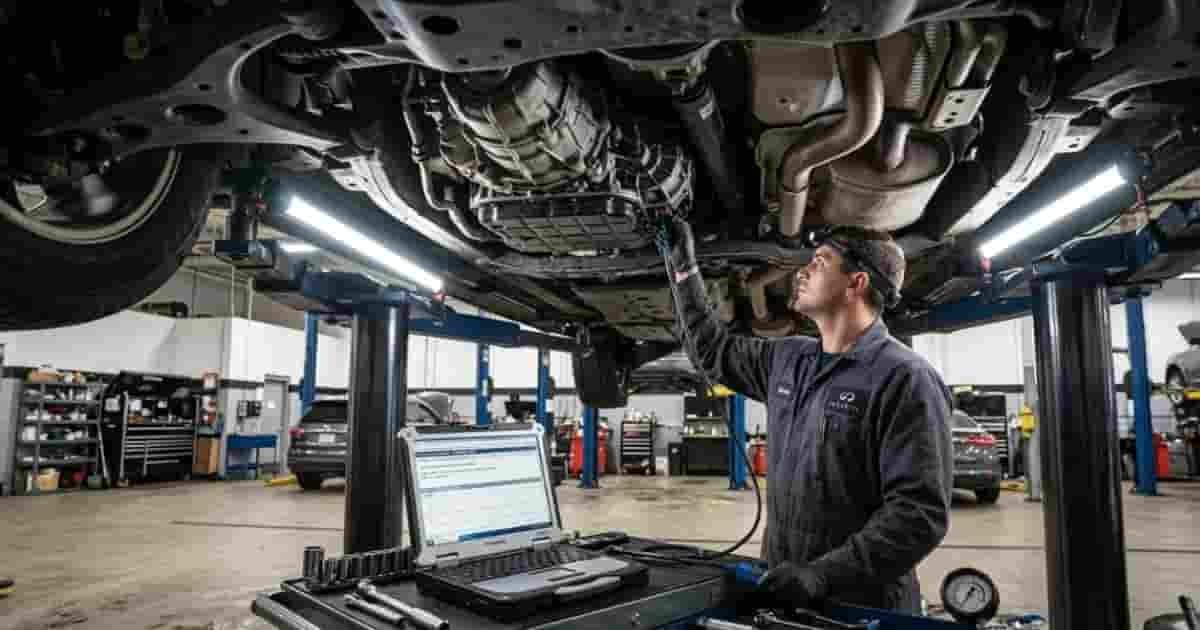
The transmission works harder when towing, driving in deep sand, or travelling long distances. Old transmission fluid loses its ability to cool and lubricate internal components, increasing wear.
If you regularly drive off-road, inspect and replace transmission fluid, transfer case fluid, and differential oil earlier than the normal schedule. Clean fluids help maintain smooth gear changes and extend drivetrain life.
8. Check Suspension and Steering Components
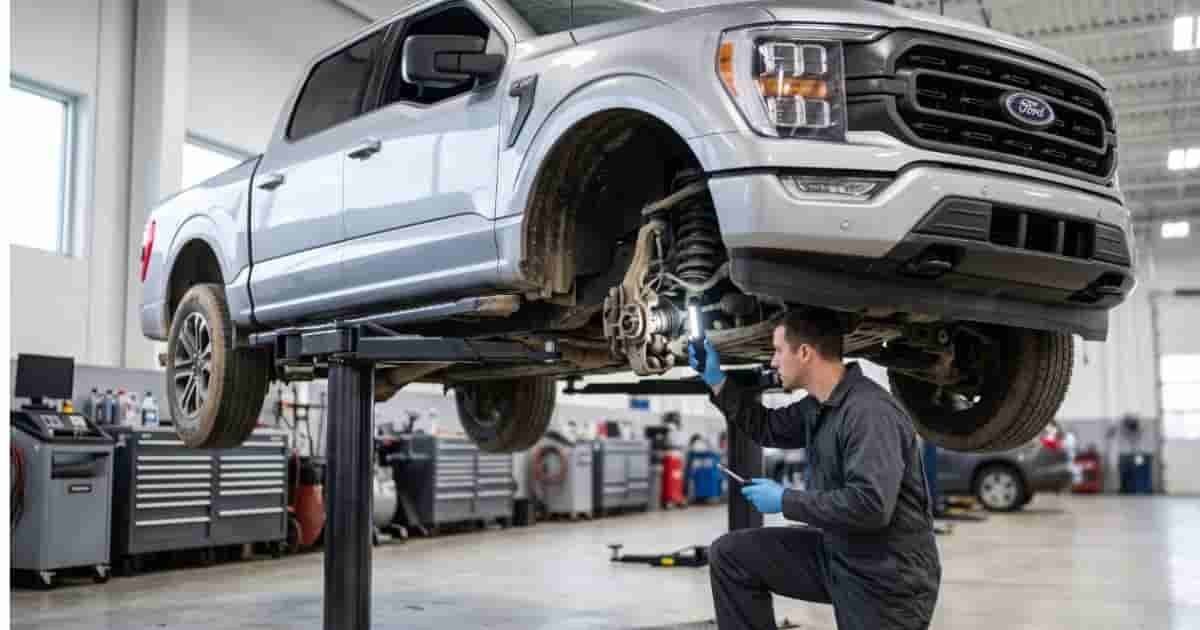
The F-150 suspension absorbs constant impacts from rough roads, desert trails, and speed bumps. Over time, shock absorbers, bushings, ball joints, and steering components begin to wear. Ignoring these parts can reduce ride comfort and affect vehicle control.
Inspect the suspension during routine maintenance and wash the underbody after off-road trips to remove trapped sand that can increase wear on moving parts.
9. Perform Regular Computer Diagnostics
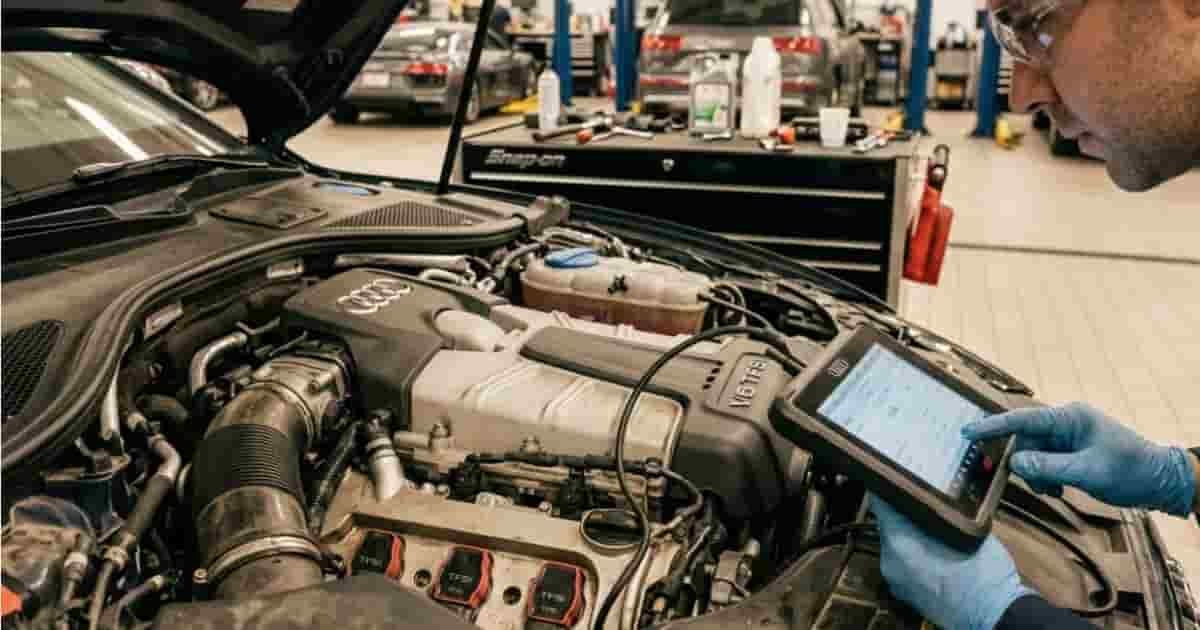
Modern F-150 models use many electronic sensors and control modules to monitor engine performance, transmission operation, emissions, and safety systems. Some faults develop long before a warning light appears on the dashboard.
Professional diagnostic equipment can detect hidden issues early, helping prevent unexpected breakdowns. Regular electronic inspections also ensure all vehicle systems continue working correctly.
Extra Tips for Better F-150 Performance in the UAE
Besides regular servicing, a few simple habits can help your truck last much longer.
- Park in shaded areas whenever possible to reduce heat exposure.
- Wash the vehicle regularly to remove sand, dust, and road salt.
- Clean the underbody after driving on desert trails.
- Avoid aggressive acceleration during very hot weather.
- Check all fluid levels before long highway trips.
- Listen for unusual noises and have them inspected early.
These simple habits reduce stress on important vehicle components and improve long-term reliability.
Conclusion
Regular maintenance is the best way to protect your Ford F-150 from the UAE’s demanding driving conditions. Timely servicing of the engine, cooling system, transmission, brakes, suspension, tires, battery, and filters helps prevent costly repairs while improving safety and reliability.
Following a maintenance schedule designed for local conditions allows your truck to deliver dependable performance whether you drive in the city, on highways, or across desert terrain.

We are storytellers at heart — a team of travel lovers and lifestyle enthusiasts who call the UAE our favorite subject. We dig deeper than the highlights, explore beyond the obvious, and bring you content that is as real as it gets. From hidden gems to iconic landmarks, we cover the Emirates the way it deserves to be covered.